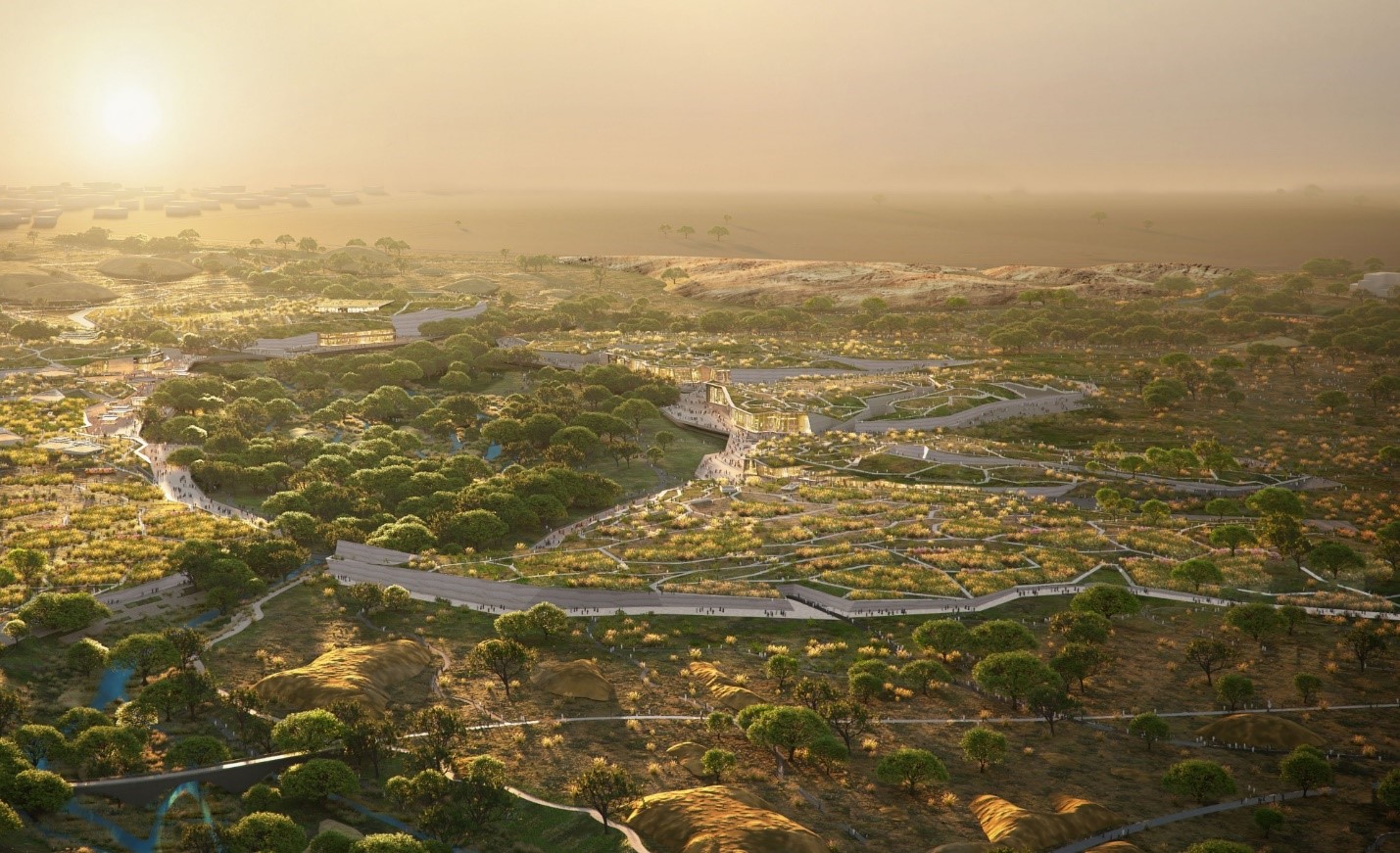
The Board of Directors of the Royal Commission for Riyadh City has announced the commencement of the implementation of King Abdulaziz Park, one of the major parks in Riyadh, as part of the “Green Riyadh” projects. His Majesty King Salman bin Abdulaziz Al Saud issued a directive to name the park “King Abdulaziz Park” following the recommendation of His Royal Highness Crown Prince Mohammed bin Salman bin Abdulaziz Al Saud, Prime Minister and Chairman of the Board of Directors of the Royal Commission for Riyadh City.
The construction work on the project, which spans approximately 4.3 million square meters, has begun and is expected to be completed within 36 months. The park is located in the northern part of Riyadh, bordered by King Salman bin Abdulaziz Road to the north, Prince Faisal bin Bandar bin Abdulaziz Road to the west, Prince Badr bin Abdulmohsen Road to the east, and Anas bin Malik Road to the south. Its location is close to key sites such as King Khalid International Airport and Princess Nourah bint Abdulrahman University and is connected to a railway station, making it easily accessible from all parts of the city.
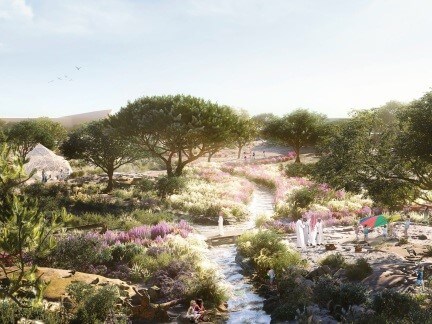
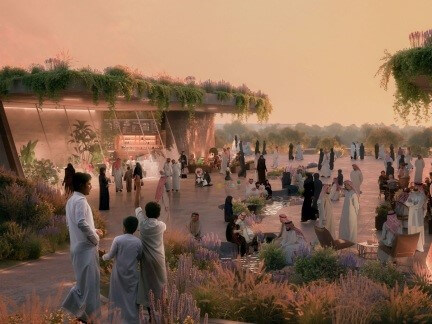
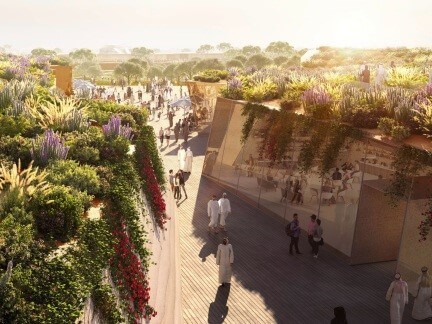
The park’s design was selected from multiple submissions by four international companies that presented their best ideas and designs in accordance with sustainability and environmental requirements. The winning design incorporates six diverse landscaping styles, the most prominent of which is the botanical garden located at the center of the park, covering an area of over 200,000 square meters and featuring more than 200 species of local plants in high density. Additionally, the park utilizes the Munisiya stream, a tributary of Wadi Al-Sulay, which runs through the park for over 11 kilometers and covers an area of more than 770,000 square meters within the botanical garden. The park will also feature sustainable commercial buildings that blend harmoniously with the landscape, along with a panoramic walkway extending over two kilometers.
The remaining five landscape styles include highland gardens, plains, hills, and desert gardens, each designed with different tree and shrub selections to enhance biodiversity and attract birds, butterflies, and other wildlife. The park will be extensively greened, with 65% of its area shaded by trees through the planting of more than two million trees and shrubs carefully selected to thrive in Riyadh’s environment, ensuring sustainability. Recycled irrigation water will be used efficiently to meet the trees’ needs.
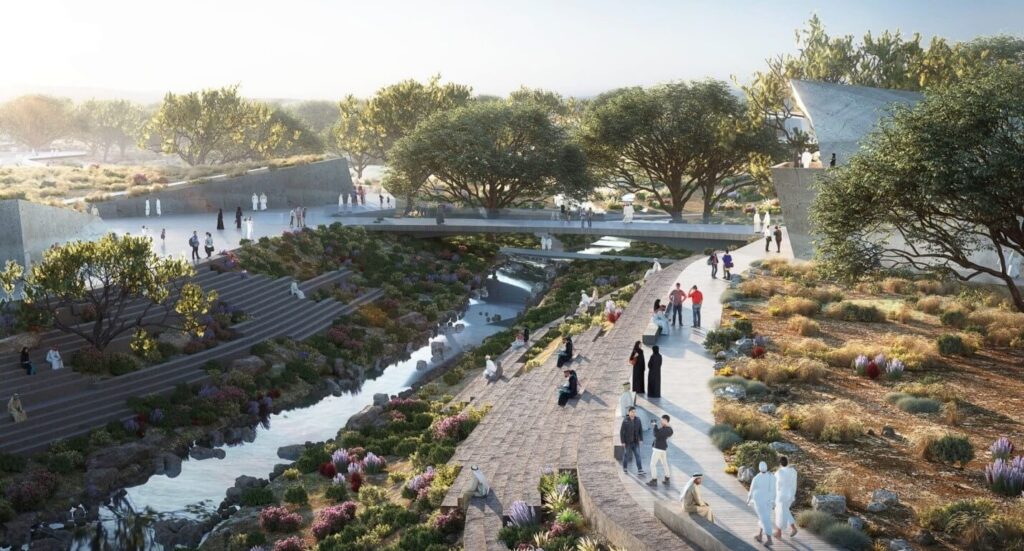
The park will feature architecturally distinctive environmental landmarks that serve as urban attractions, drawing residents and tourists while providing recreational spaces. It will include 24 children’s play areas and 30 sports zones distributed throughout the park. Additionally, the Munisiya Valley will help reduce temperatures, creating a comfortable and healthy outdoor experience throughout the day for all age groups. The park’s design also encourages walking, with shaded pedestrian paths and dedicated running and cycling tracks extending over 115 kilometers, encouraging individuals to walk more than 6,000 steps daily. Moreover, the park will include green terraces, open-air amphitheaters for events and festivals, restaurants, and various recreational activities.
It is worth noting that “Green Riyadh” has already commenced work on several major parks within the city, including Al-Orouba, Al-Munisiya, Al-Qadisiyah, and Al-Rimal parks, along with afforestation of valleys and their tributaries, tree planting along main roads and intersections, and greening residential neighborhoods. The initiative also includes the development of neighborhood parks, tree-lined streets, shaded sidewalks, pedestrian pathways, and afforestation of mosques, schools, parking lots, government buildings, and public institutions, such as ministries, universities, and agencies. Additionally, an extensive irrigation network spanning 1,350 kilometers is being developed across the city. The project’s nurseries produce three million trees, shrubs, and ground covers annually to meet the afforestation needs.
The “Green Riyadh” project significantly contributes to achieving the objectives of the “Saudi Green Initiative” and the “Saudi Vision 2030,” which include planting 10 billion trees across the Kingdom. The project aims to plant 7.5 million trees in Riyadh, increase the city’s green cover to 9%, and raise the per capita green space from 1.7 square meters to 28 square meters—16 times its current size. This initiative will help reduce temperatures, improve air quality by decreasing pollution and dust levels, and enhance Riyadh’s global ranking, making it one of the world’s most livable cities.