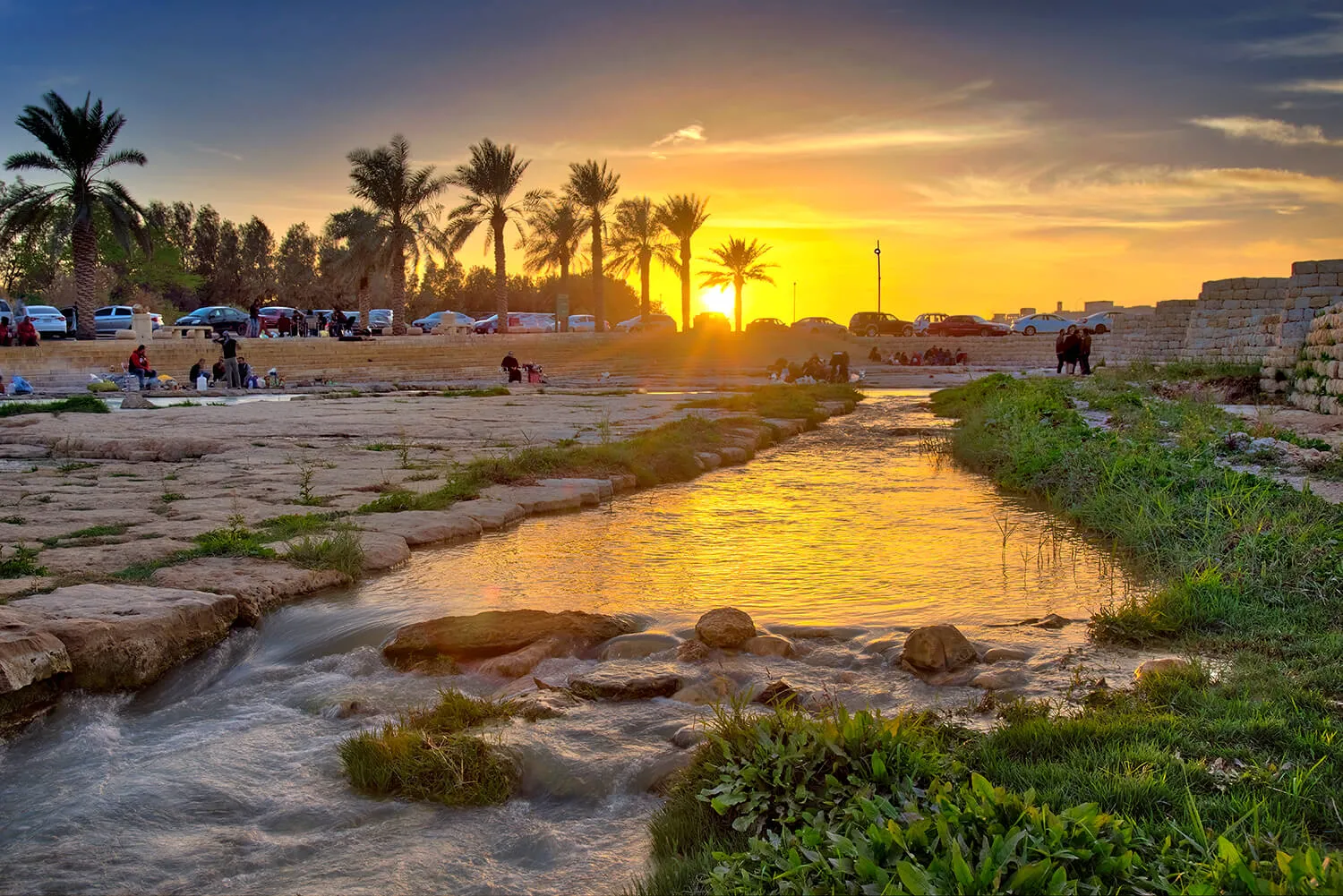
The Wadi Hanifah has been rehabilitated over a length of 120 kilometers, from Al-Haysiah in the north to Al-Hayer in the south, with the rehabilitation of several of its tributaries covering 34 kilometers. Notable tributaries include Wadi Labban, Wadi Uber, Wadi Safar, Wadi Al-Mahdiyah, and Wadi Namar. More than 150,000 native trees and shrubs have been replanted, waste scattered throughout the valley has been removed, and the natural watercourses have been restored.
The flow of water in the valleys reaches around 200,000 cubic meters per day, contributing to lowering temperatures, cooling the air, and increasing humidity levels in the valley, its tributaries, and the surrounding area.
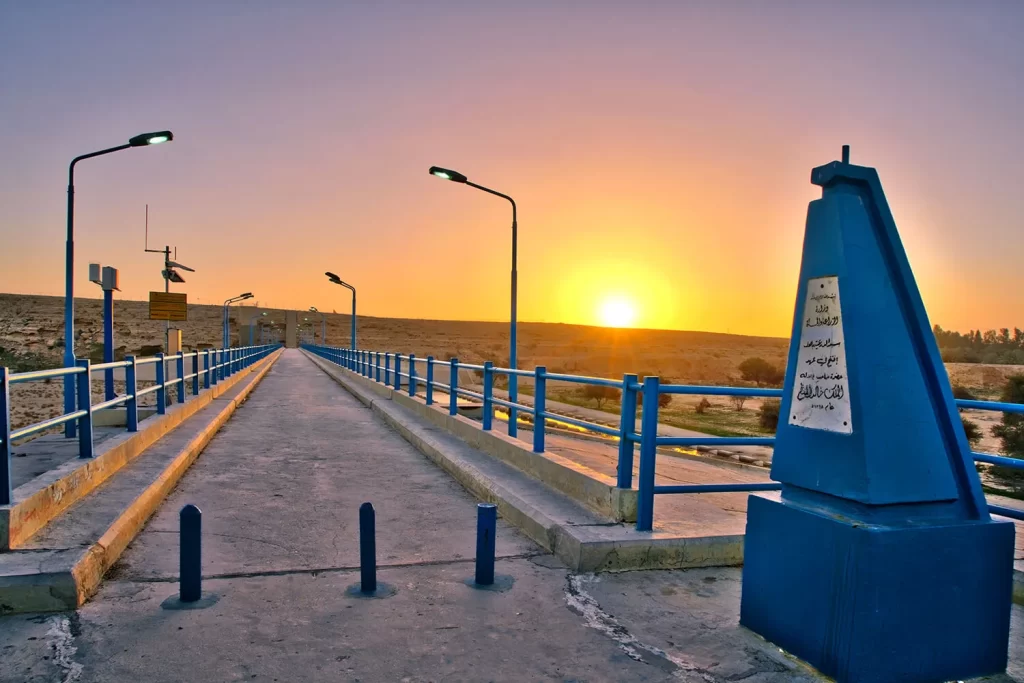

The development of Wadi Hanifah has won several international awards, including:
- The Best Water Source Development Plan Award globally in 1423 AH (2003) from the Water Center in Washington, D.C.
- The Global Gold Award from the International Organization for Bio-Communities for the best environmental and water conservation project in 2007.
- The Aga Khan Award for Architecture in 2010.


The Environmental Rehabilitation Program for Wadi Hanifah and Its Tributaries contributes to the ecological balance of the valley through the planting and settlement of native trees and plants. It reduces temperatures in surrounding areas by 3-4°C compared to other parts of the city. The project also provides a natural and recreational outlet for the residents of Riyadh, promoting greater interaction between the city’s residents and their natural environment. This initiative improves public health by creating a suitable environment for attracting appropriate investments and sustainably utilizing the valley’s facilities.